




Home » Small Business Demands Legislation to Fight Growing Swipe Fees
Small Business Demands Legislation to Fight Growing Swipe Fees
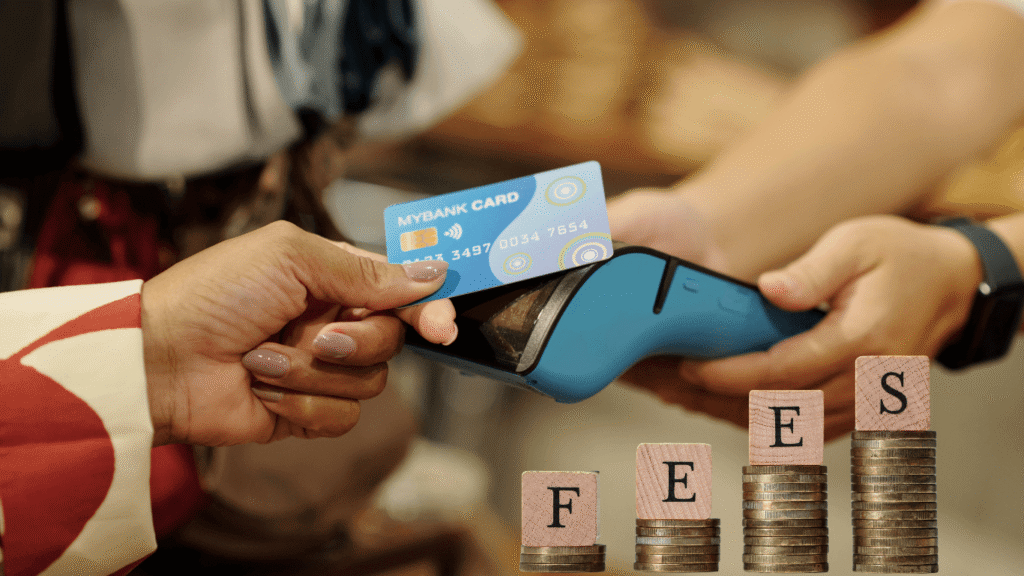
This NFIB analysis addresses a massive “hidden” expense for small businesses: Credit Card Swipe Fees (also known as interchange fees). Since the original article is brief, I have expanded it into a comprehensive deep dive that explains the mechanics of these fees, the “duopoly” problem, and the specific legislation currently in the spotlight.
This NFIB analysis addresses a massive “hidden” expense for small businesses: Credit Card Swipe Fees (also known as interchange fees). Since the original article is brief, I have expanded it into a comprehensive deep dive that explains the mechanics of these fees, the “duopoly” problem, and the specific legislation currently in the spotlight.
The Hidden Tax on Main Street: Why Small Businesses Are Fighting Back Against Rising Swipe Fees
For most small business owners, every time a customer taps, chips, or swipes a credit card, a significant portion of that sale vanishes before it even hits the bank account. These “swipe fees” have become the third-highest operating cost for many small businesses, trailing only labor and rent.
As inflation continues to squeeze margins, the NFIB is leading a national demand for legislative reform to break the “duopoly” that controls the credit card market. Here is a detailed look at why this issue has reached a boiling point.
1. The Mechanics of the "Swipe Fee"
When a customer uses a credit card, the merchant (the business) is charged a fee that typically ranges from 1.5% to 3.5% of the total transaction. While this sounds small, it is a percentage of revenue, not profit. For a business with 10% profit margins, a 3% swipe fee actually eats up 30% of their total profit on that sale.
These fees are set by the giant card networks (Visa and Mastercard) but are collected by the banks that issue the cards. Because these fees are often a percentage of the total transaction—including sales tax—swipe fees actually act as an “Inflation Tax.” As prices for goods go up, the dollar amount collected in swipe fees rises automatically, even if the service provided by the bank hasn’t changed.
2. The Duopoly Problem: Visa and Mastercard
The primary driver of high fees is a lack of market competition. Visa and Mastercard currently control over 80% of the credit card market.
Unlike other industries where competition drives prices down, Visa and Mastercard set the interchange rates centrally for all the thousands of banks that issue their cards. This means banks don’t have to compete on price to get a merchant’s business. If a small business wants to stay in business, they must accept these cards, leaving them with zero bargaining power to negotiate lower rates.
3. The Credit Card Competition Act (CCCA)
The “legislation” mentioned by the NFIB refers primarily to the Credit Card Competition Act. This bipartisan bill aims to inject competition into the market by requiring the largest banks (those with over $100 billion in assets) to offer at least two different routing networks for every credit card transaction.
Currently, Visa and Mastercard mandate that transactions made on their cards must be processed through their own proprietary networks. The CCCA would force them to allow at least one independent network (like NYCE, Star, or Shazam) to compete for that transaction. Experts estimate that this competition could save small businesses and consumers over $15 billion annually.
4. Why This Matters for the Consumer
Swipe fees are not just a “business problem.” Because businesses cannot afford to absorb these rising costs, they are often forced to:
- Raise Prices: Passing the fee onto the consumer.
- Surcharge: Adding a 3% fee at the register for credit card use.
- Minimums: Requiring a $10 or $15 minimum for card use, which can turn away customers.
Furthermore, the NFIB points out that swipe fees effectively subsidize high-end “rewards” cards. Lower-income consumers who pay with cash or debit are essentially paying higher prices for goods to fund the “points” and “miles” enjoyed by premium credit card users.
5. The Soho SoCal Perspective: Protecting Your Bottom Line
At Soho SoCal, we view swipe fees as a “leak” in your wealth stewardship. While we focus on protecting your assets through insurance and strategic planning, we also believe in advocating for the “Quiet Confidence” that comes from fair market practices.
Strategic Tips for Business Owners:
- Evaluate Cash Discounts: Many states now allow “Dual Pricing” where you offer a lower price for cash/debit and a standard price for credit.
- Review Your Processor: Ensure you are on an “Interchange Plus” pricing model rather than “Tiered” pricing, which is often much more expensive for small businesses.
- Join the Advocacy: Follow the NFIB’s efforts on the CCCA. Your voice as a local business owner carries significant weight with Congressional representatives.
Popular Posts

Federal Employment Laws Every Small Business Should Know
July 25, 2026

Employee Handbook Guide for Small Businesses
July 25, 2026